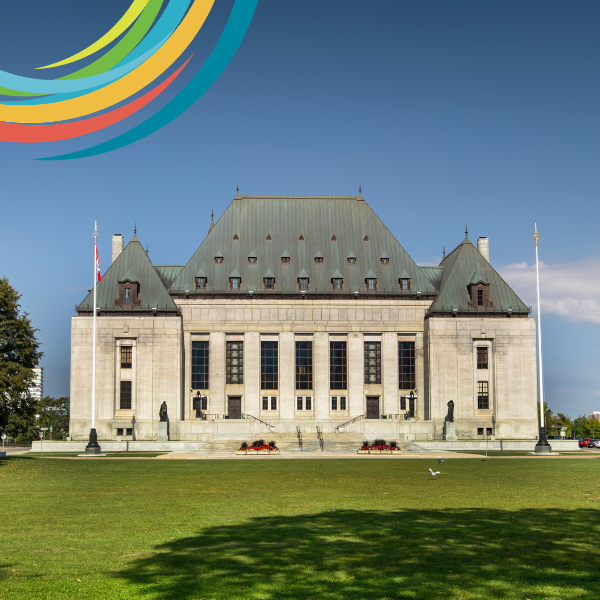
On Friday, October 9, 2026, CCCC appeared at the Supreme Court of Canada (SCC) in a joint intervention with the Evangelical Fellowship of Canada (EFC) in the Vabuolas case. You can watch CCCC/EFC oral submissions here (beginning at 2:35:30) and can read CCCC/EFC written submissions here.
Issue: Commissioner Review of Religious Decisions
The key issue in Vabuolas was whether the British Columbia Privacy Commissioner could compel production of purely religious records for line-by-line review. CCCC and EFC intervened to ensure that purely religious decisions, and records of those decisions, are not subject to state oversight, whether by an independent commissioner or otherwise.
Privacy legislation cannot determine the scope of freedom to make purely religious decisions; rather, freedom of religion must refine the scope of legislation.
Precedent: Courts Do Not Review Religious Decisions
It is well established law that purely religious, theological, and doctrinal decisions are not justiciable, that is, courts don’t second-guess or make judgements about them. They don’t have the proper authority or the necessary expertise.
Two SCC decisions, Wall (2018) and Aga (2021), affirmed that membership in a religious association, without more, does not create legal rights. Courts have consistently exercised restraint when it comes to religious organizations. While a religious context doesn’t preclude a court from judging a contract, corporate, or property law dispute, purely religious decisions remain outside court jurisdiction.
Practically, this means that a court could review whether an incorporated church followed its bylaws but would refrain from deciding whether the Matthew principle was met or if a member satisfied spiritual criteria. Or a court could review an employee’s termination to ensure employment standards are met but would refrain from deciding the outcome of a related doctrinal dispute.
Our position in this case was that it simply raised a new context of privacy law that likewise requires restraint toward purely religious matters.
Judgement: Released at a Future Date
The SCC reserved its decision, meaning it will be released at a later date. Once the SCC releases its judgement, we’ll be sure to update you here on our blog.
We’re Here to Help
If you have questions or would like support, please contact our Member Support Team by phone or email.
The content provided in this blog is for general information purposes and does not constitute legal or professional advice. Every organization’s circumstances are unique. Before acting on the basis of information contained in this blog, readers should consult with a qualified lawyer for advice specific to their situation.

Share this post